
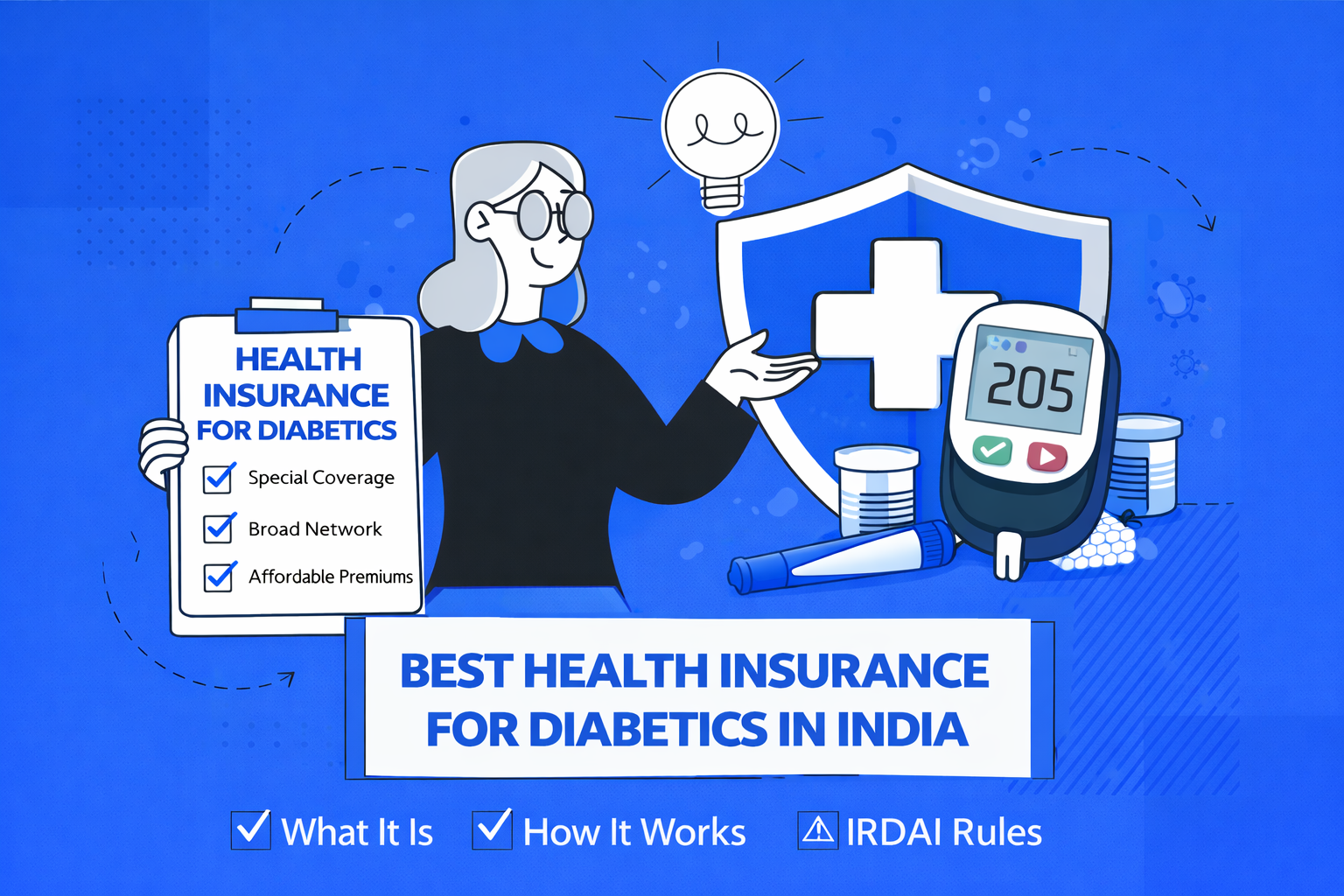
Diabetes is one of the most common pre-existing conditions declared in health insurance applications in India — with over 77 million diabetics, India has the second-largest diabetic population globally (IDF Diabetes Atlas 2023). Buying health insurance as a diabetic, or being diagnosed after buying, requires understanding how PED waiting periods work, what specialist plans offer, and how to build a structure that covers both diabetic complications and unrelated hospitalisations.
How Diabetes is Treated as a Pre-Existing Disease
When you apply for health insurance, any conditions that exist before the policy’s inception date must be declared. Type 1 and Type 2 diabetes, if diagnosed before the policy purchase date, are classified as pre-existing diseases (PEDs).
What this means:
- Hospitalisations for diabetes-related reasons are not covered during the PED waiting period
- After the waiting period (typically 3 years), all diabetes-related hospitalisations are covered
- Failure to declare diabetes is non-disclosure — it can void a claim years later if the connection to diabetes is established
IRDAI’s 2023 amendment: Maximum PED waiting period for any condition is now 36 months (3 years), down from the previous 4-year maximum some plans had. This benefits diabetics who now know the wait is capped at 3 years.
PED Waiting Period for Diabetes: Plan Comparison
| Plan | PED Waiting Period for Diabetes | Covers Diabetes Complications After Wait? |
|---|---|---|
| Standard individual plans (most) | 3 years (IRDAI maximum) | Yes |
| Star Health Diabetes Safe | 12 months for in-patient; OPD from Day 1 | Yes |
| HDFC Ergo Optima Secure | 3 years | Yes |
| Niva Bupa ReAssure 2.0 | 3 years | Yes |
| Care Health Supreme | 2 years (for some PEDs) | Yes |
Waiting periods can change at renewal or with product revisions. Verify with current policy documents.
What Happens After the Waiting Period: Covered Conditions
Once the PED waiting period is served, a standard health insurance policy covers all hospitalisations related to diabetes, including:
Direct Diabetes Hospitalisations
- Diabetic ketoacidosis (DKA) — acute emergency
- Hyperosmolar hyperglycaemic state (HHS)
- Severe hypoglycaemia requiring hospitalisation
- Insulin initiation or pump implantation (in-patient)
Diabetes-Related Complications
- Diabetic retinopathy: Eye surgery, laser treatment (also covered as daycare)
- Diabetic nephropathy: Dialysis (covered as daycare), kidney transplant
- Cardiovascular: Cardiac surgery (heart attack, bypass, stenting) where diabetes is a contributing factor
- Peripheral neuropathy: Foot ulcer treatment, amputation
- Diabetic foot: Wound care requiring hospitalisation
Star Health Diabetes Safe: A Closer Look
Star Diabetes Safe is a specialist plan that covers both Type 1 and Type 2 diabetes along with related complications. Key features:
Coverage structure (Select variant):
- In-patient hospitalisation: Covered
- OPD (doctor visits, medications): Covered with sub-limits
- Diabetes-related complications: Covered
- Shorter PED wait for diabetes: In-patient covered after 12 months
Who it suits:
- Diabetics who want OPD coverage for ongoing diabetes management (medication, consultations)
- Buyers above 40 with Type 2 diabetes where complications are beginning to develop
- Buyers who want diabetes-specific coverage to activate sooner than the standard 3-year PED wait
Limitations:
- Higher premium than standard plans at equivalent SI
- OPD sub-limits restrict actual diabetes management costs covered
- Does not replace a broad-coverage standard health plan for non-diabetic hospitalisations
Standard Plans for Diabetics: What to Check
When evaluating a standard individual or family floater plan as a diabetic:
-
PED loading: Ask whether diabetes attracts a premium loading beyond standard rates. Disclose fully and compare loading levels across insurers.
-
PED exclusion vs waiting period: Some older plans permanently exclude PED-related conditions. IRDAI’s 2023 regulations favour waiting periods over permanent exclusions. Avoid plans that permanently exclude diabetes.
-
Continuity credit on portability: If you already have a policy with waiting period credits for diabetes, you can port these to a new policy under IRDAI portability rules. This allows starting coverage sooner if changing insurers.
-
Restore benefit relevance: Diabetics with higher claim probability benefit more from same-illness restore plans (e.g., Niva Bupa ReAssure 2.0) where multiple diabetes-related hospitalisations in a year can each trigger restoration.
Recommended Structure for Diabetics
For a diabetic aged 35–50 with good overall health (no major complications yet):
- Standard comprehensive plan at ₹10–15 lakh SI — covers everything after 3-year PED wait
- Consider Star Diabetes Safe as a parallel plan for OPD and shorter-wait diabetes-specific cover
- Disclose diabetes fully — non-disclosure risk exceeds any short-term premium saving
For a diabetic above 55 with complications:
- Star Health Senior Citizens Red Carpet — 12-month PED wait is critical for this profile
- Supplement with Diabetes Safe for OPD if budget allows
- Act quickly — entry age limits narrow options above 70
Disclaimer: PolicyJack is an independent research platform. We do not sell insurance, receive commissions, or have commercial relationships with any insurer.